
How She 10x’d Her Wedding Planning Business In A Year
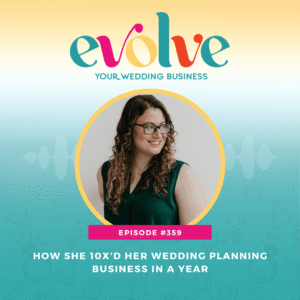
Katie Sautter was last on this podcast after booking 29 weddings in her first year as a wedding planner. At the time, she was still working her engineering 9-to-5, logging about 100 hours a week between both jobs, and just starting to think about what it might look like to go all in.
She went all in.
In 2025, Katie quit her job, built a team of five, went from under $10K in revenue to six figures, and did all of it in a single year. She attributes a huge chunk of that growth to a framework called the Lazy Genius Way, and to one particular tool her team built from scratch: a 75-step wedding management system she calls the Due Date Dashboard.
In this episode, Katie walks through exactly how she did it, what the Lazy Genius principles actually look like applied to a wedding planning business, how she survived 12 weddings in 8 weeks without anything falling through the cracks, and why she’s now selling the Due Date Dashboard so other planners can use it too.
In this episode we’ll cover:
- What the Lazy Genius Way philosophy actually is and which of the 13 principles made the biggest difference in Katie’s wedding planning business
- How Katie went from under $10K to six figures in a single year and what she attributes that growth to
- Why building a 75-step system for every single wedding actually makes the client experience more personal, not less
- How the Due Date Dashboard works and how it got her team through 12 weddings in 8 weeks without missing a beat
- The SWOT analysis process Katie used inside The Wedding Business Collective to figure out exactly how to stand out in her market
- Why being loudly specific about who you serve, even if it feels risky, is what separates the wedding pros who get chosen on vibe from the ones who compete on price
- What Katie does with a billion ideas and a mild case of ADHD to figure out which ones are actually worth pursuing
About Katie Sautter
Katie Sautter is the founder and CEO of K.S.Otter Events, a North Carolina–based wedding planning company known for its inclusive values, sustainable approach, and exceptionally strong systems. With a PhD in Materials Science and Engineering, Katie brings a rare blend of analytical rigor and creative problem-solving to the wedding industry, translating complex logistics into calm, confident planning experiences. Since launching her business in 2023, she has scaled from solo planner to leading a multi-planner team, earning national recognition while mentoring other professionals on systems, sales, and sustainable growth. Katie is passionate about building businesses that are both profitable and human-centered, and she’s especially committed to helping planners create clarity, boundaries, and longevity in an often chaotic industry.
K.S.Otter Events is an award-winning, LGBTQ+-affirming wedding planning company serving North Carolina and beyond. Built on the belief that thoughtful systems create better client experiences, the company blends eco-conscious planning, transparent processes, and deep vendor collaboration to produce weddings that feel intentional and well-run. Known for its highly organized approach and strong referral relationships, K.S.Otter Events operates as a true team-based planning company: allowing planners to focus fully on their couples while delivering consistent, high-quality service. The brand has become a trusted name among venues and vendors for its professionalism, clarity, and commitment to making weddings smoother for everyone involved.
Website: ksotterevents.com
Instagram: @ksotterevents
Links & Resources:
The Wedding Business Collective
Wedding Planner Marketing That Works – How Katie Sautter Booked 29 Weddings in Her First Year
Katie’s Due Date Dashboard
The Lazy Genius Way by Kendra Adachi
The One Thing by Gary Keller
Want more? To subscribe to the podcast, please use the links below and be sure to leave a review:
Click here to subscribe via iTunes/Apple Podcasts (You’ll just need to click the blue “View In iTunes” button and then click the Subscribe button when your iTunes opens.)
Click here to subscribe via Spotify
Click here to subscribe in any other podcast player
And please take 2 minutes to leave me an honest rating and review on iTunes by clicking here. It will help the show and its ranking immensely! Thank you – I appreciate it!
Still Paying for The Knot or WeddingWire (Because You Don't Have A Plan B)?
So many wedding pros have told me they're not seeing the results they used to from directories.
Discover the proven roadmap wedding pros use to stop depending on directories and finally attract inquiries that lead to bookings.
Transcript: How She 10x’d Her Wedding Planning Business In A Year
Heidi Thompson:
What does it take to go from under $10,000 in revenue to six figures in just one year? Katie Sautter is about to tell you.
Heidi Thompson:
Welcome to the podcast. I am your host, Heidi Thompson, and I help wedding professionals book more weddings, make their marketing easy, and grow their businesses without it eating their life whole. And today we have a special returning guest. The last time Katie Sautter was on this podcast, she had just hit 29 bookings in her first year as a wedding planner. Huge achievement. I brought her back because since then she has quit her engineering job, built a team of 5, and 10x’d her business in a single year, going from under $10,000 in revenue to over $6 figures. She did it by applying a surprisingly simple philosophy called the Lazy Genius Way. And today we get into what that actually means, how she has structured her team around it, the 75-step system she built to keep her client experience absolutely bulletproof, even going through 12 weddings in 8 weeks. She was able to survive that thanks to her system. This is such a good one, so let’s get into it. Today I am joined again by previous guest Katie Sautter. She is a wedding planner, a previous member of the Wedding Business Collective who I’ve had the privilege of working with and getting to know and see grow over the years. And she reached out to me and was like, hey, would you like to talk about how I used these ‘Genius Principles’ to 10x my business in a year. And I was like, um, yes, Katie, please. So Katie, thank you for joining me. I can’t wait to hear all about this.
Katie Sautter:
Thanks so much for having me. I was so excited to chat with you again and catch up and all that good stuff.
Heidi Thompson:
So I know last time we talked you were getting ready to leave your job. I know you have since done that. You’ve been building a team, and I’m sure you’re going to tell us all about that. But first, why don’t you introduce us to these lazy genius principles? Because, I mean, the title itself is good.
Katie Sautter:
Yeah, um, so if you haven’t read the book, it’s called The Lazy Genius Way by Kendra I’m not really sure how to pronounce the last name. Adachi? Adachi? Oh, please no one sue me over that. But kind of the core philosophy is be a genius about what matters and lazy about what doesn’t. So it’s kind of about like intentionally putting effort into the things that align with your values and priorities and letting go of pressure around everything else. It’s really about perfection not getting in the way of good enough. And that isn’t to say that, like, what you create using this philosophy isn’t gonna be amazing, right? But sometimes you just have to let go and say, I’m leaping in.
Heidi Thompson:
And I think it’s important to know what matters, what doesn’t, because there are just some things that matter more than other things.
Katie Sautter:
Yeah, absolutely. And actually, another excellent book— that was actually one of the recommendations you had given me— was called The One Thing. That is such a good book. Very similar concepts, but very, very much more focused.
Heidi Thompson:
Yes. So I love that you have taken this approach and really applied it. And you know, you’re speaking my language when it comes to being really intentional, not spending time on things that don’t matter. I talk about this every day of my life. I’m obsessed with it. And I mean, there are— how many principles are there? And can you take us through like which ones you’re implementing and then we can dig into those?
Katie Sautter:
Right, so there are 13 to my knowledge. I actually don’t have a copy. I mostly just listen to audiobooks, but there are 13 to my knowledge, and I have not used all of them, but—
Heidi Thompson:
shows you don’t need to.
Heidi Thompson:
Yeah, honestly, there were some things that I disagreed with Kendra on, um, and sometimes I don’t always enjoy every aspect of her points.
Katie Sautter:
So it’s, it’s less about that and more about some of the other key points that she had, which were excellent.
Heidi Thompson:
Um, One of those is decide once.
Katie Sautter:
So making a decision once and sticking with it to reduce your kind of daily mental load. For her, it was like what to wear and how to plan meals.
Heidi Thompson:
And I cannot organize my life like that. That’s amazing.
Katie Sautter:
But for me, it was more like decide once on what I do next. And then move from there. Oh, I like that. The second principle is starting small. So this one, mixed bag for me on how I implemented this.
Heidi Thompson:
I can chat about that in a moment. But for her, it’s kind of beginning with tiny manageable steps rather than trying to overhaul everything at once. My conflict with that one is that I have goals that I do want to attain, and I do still need to make those goals happen.
Katie Sautter:
But what I agree with in that is taking small steps in the right direction every day.
Heidi Thompson:
And I can chat about how I do that.
Katie Sautter:
It’s— you’ve got to break things down into tiny, manageable steps. And it’s good to have a goal to work towards. Otherwise, where are you walking? If we’re gonna be talking about steps. The third point is asking the magic question. And that magic question is, what can I do now to make life easier later? So in some ways, I think every aspect of what I do is geared toward my future.
Heidi Thompson:
So it, that is where I’ve been proactive.
Katie Sautter:
And trying to reduce future stress.
Heidi Thompson:
That has not meant necessarily that I’m not working my butt off right now to make that happen.
Katie Sautter:
The fourth principle is kind of living in the season, recognizing and accepting your current life context and what matters right now that might change later. That has always been a philosophy in my life. So that one wasn’t hard for me to adapt to because I’ve noticed throughout my life being open-minded about what might change for me later is far more agreeable long-term than like just, you have so much more angst with things do have to change, if that makes sense, if you don’t have this philosophy. Whereas like accepting that things do change is really important. The 5th principle is building the right routines.
I can’t say that I had a good routine when I still had a W-2 job, which I no longer—
I no longer have a W-2 job, which is awesome. But I had no routine when I was able to quit my job. So for me, the level of success that I achieved had less to do with routine and more to do with everything else. Then there’s also setting house rules. So simple guidelines that your home life smoother and clearer for everyone. I didn’t do this. I’ve got to be honest. But I don’t think I’ve really needed to.
Heidi Thompson:
Then there’s also putting everything in its place.
Katie Sautter:
This is the 7th principle. So it’s like organizing and reducing clutter and stress. Again, guilty, charged, haven’t done this.
Heidi Thompson:
I would say I have a kind of chaotic clutter happening.
Katie Sautter:
It’s like organized chaos in my house. Is that relatable?
Katie Sautter:
100%.
Katie Sautter:
It’s like, how does people have like these beautiful like homes anyway? I’m like, I don’t know what happens around me, but, um, so the 8th principle is letting people in. So inviting others into your life, sharing space, tasks, and vulnerability.
Heidi Thompson:
I’ve done this mostly in business.
Katie Sautter:
I’ve been very focused on business. So it’s been less about interpersonal relationships. So that’s, that’s where that’s been for me. The 9th principle is batching. So batch it, right? Group similar tasks together. It reduces time. Oh gosh, what is
Katie Sautter:
What is it called, Heidi?
Heidi Thompson:
Oh, um, context switching.
Katie Sautter:
Thank you. That reduces that context switching. Um, so like trying to group all your sales calls together, for example, trying to group all your client work together. Um, and I have absolutely 100% done that. Um, And it’s been so helpful. I highly recommend it. It is.
Heidi Thompson:
It’s seriously, it sounds silly, but it’s a game changer.
Katie Sautter:
Yeah, it’s just like having sales calls not in the morning.
Katie Sautter:
I have figured out just like allows me time to breathe. It’s just I can’t, I can’t emphasize it enough. Batching really, really helps with that kind of context switching and relieving that anxiety. I love that.
Katie Sautter:
The 10th principle is essentializing.
Katie Sautter:
So kind of keeping only what genuinely matters and letting go of what doesn’t serve my goals or joy. Absolutely everything I’ve done is part of essentializing. I have these strong goals in mind, and I know what I wanna strive for, and it really helps kind of like narrow in on what needs to happen next. The 11th principle is going in the right order. So doing things in sequence, not just the way that you want to do them, but more so in a way that actually works. This one I haven’t quite figured out, to be honest. Um, but I have my own recommendations for how to do what I did, um, which I can get into in a moment. The 12th one is scheduling rest, and I have done this. Um, some points I have been forced to do this, which is probably not ideal. Um, but scheduling rest is definitely critical when you are the CEO. Of your business.
Katie Sautter:
And the 13th and final principle is just being kind to yourself.
Katie Sautter:
So practicing self-compassion, recognizing progress, honoring your limitations, resisting perfection. So I think I’m generally pretty kind to myself, but that’s not always the case.
Heidi Thompson:
Yeah, sometimes we need a reminder. And I, I love these. All of these principles are great. I need to check out this book. I can’t believe I haven’t heard of it because I’m so aligned on so many of these. And to give someone perspective, you know, last time we spoke on the podcast, we talked about you went from 0 to 29 bookings in a year, and I believe you had like another 16 or something like that lined up for the next year. Why don’t you tell us a little bit about what your business looks like now? Because you have since left your job, you have since built a team. So give us like a now picture, right?
Katie Sautter:
So I never anticipate 10xing my business again in a single year. I just don’t think that that would be feasible. Um, but that’s because where my revenue was In 2024, it was about, I mean, it was under $10K. We’ll go with that. And officially we are a 6-figure business. And I did that in 2025. So that is, I don’t anticipate going to a 7-figure business in a single year, if that makes sense. Yeah, that would certainly be a lot. That would be insane. I, I don’t think that that would be healthy. Um, but to kind of like put into perspective where I was when I last spoke to you, I was working my engineering 9 to 5, um, and I was working probably about 100 hours a week on both my 9 to 5 and my business. Um, and I was working about 100 hours a week from September 2024 until about May 2025. It has since become far more reasonable for any living human.
Katie Sautter:
I do not recommend 100 hours a week.
Katie Sautter:
That’s not healthy. But I quit my job in June of 2025, which is a huge milestone for me. And ever since then, I’ve been able to kind of truly power house and focus and use my team in a way that really makes our clients go from happy to raving, which is the whole goal.
Katie Sautter:
I mean, we, we get into this business because we love what
Katie Sautter:
what we do.
Heidi Thompson:
And my goal is I really want all my couples to be happy at the end of the day.
Katie Sautter:
And there’s so many components that go into that, and it has to be cohesive all the way through.
Heidi Thompson:
Um, so at the very beginning of 2025, I was a solopreneur, and, um, I have always wanted a team because I love working in a team.
Katie Sautter:
Um, and I had this goal that by the end of the year I’d maybe make $60K in revenue. I would hire one planner. I maybe would have 4 assistants, um, on like a list that I could reach out to.
Heidi Thompson:
Um, within 2025, the business is of course now a 6-figure business.
Katie Sautter:
Um, that was a huge milestone that we had reached.
Heidi Thompson:
We been in, like, featured in publications and podcasts.
Katie Sautter:
And just like the amount of success has been humbling. And like December 31st, I really allowed myself to feel it and I cried. Just joy. It’s everything I’ve wanted.
Heidi Thompson:
And I’ve used my team, so kind of going back to that, like, what can I do to make life easier later? I absolutely thought of that in context of my couples.
Katie Sautter:
So I want their experience to be amazing all the way through the experience from sales and marketing all the way through offboarding.
Heidi Thompson:
And I used my team to help me develop something. So I took my goals and my dreams and all the problems that I was encountering as I was working and really chunked it down.
Katie Sautter:
So working into smaller steps and kind of essentialized the ones that would make the biggest impact on my couples.
Heidi Thompson:
So I still have ample I still have billions of ideas and not all of them are good, but I work very much with my team to kind of take the problems that we have and make tools and checklists and systems and things that really amplify what we’re able to accomplish. And that has absolutely tenfolded my business. So incredible.
Katie Sautter:
Let me ask you, how many people are on your team currently?
Heidi Thompson:
I now have 4 lead planners.
Katie Sautter:
That is including yourself, or then you’re on top of that?
Heidi Thompson:
Well, it would be 5 if I included myself.
Katie Sautter:
Okay.
Katie Sautter:
Wow.
Katie Sautter:
That is a big change in a short period of time. And I can see how these principles would make it— and your focus on client experience would make it so that like all of you are like rowing in the same direction, it sounds like.
Katie Sautter:
Right. And it’s, it’s hard to like understate just how good a really good system is to have in place. And we’re constantly finding areas where we can improve. And I never wanna stop seeing that. I think that that’s really important to say, you know, we can always keep stepping forward, which is one thing that doesn’t feel very Lazy Genius principle.
Heidi Thompson:
But what I really want is to achieve something incredible for everyone that comes through our door.
Katie Sautter:
And I believe that what we already have is amazing, but developing systems for every single aspect of the business is essential for that continued success.
Heidi Thompson:
So Lily, we saw, I mean, we had like 15, I think, 15 Google reviews at the beginning of the year, and we now have 55 as of—
Katie Sautter:
let’s say today’s the 22nd of January. I know that this is releasing sometime later.
Heidi Thompson:
But yeah, that’s huge. Yeah.
Katie Sautter:
We’ve done a lot. And it’s really a testament to what we have built and what we’ve built together. So I decide once what we’re going to do. I set 90-day goals. And then I divvy up tasks based on both my personal interests and set of skills as well as what my team is good at.
Katie Sautter:
and just kind of adapting based on that. So for example, one of my lead planners, Iana, is an excellent system builder. She’s very organized, and I will probably assign her more like, like systematizing type documentation to like really develop and fine tune And Rebecca is someone I’ll like, I know that her skill is very like focused on the client experience. And so I might like go to her for some of the advice on that and like just kind of, I mean, it’s really going around the personalities and talents of my team and it’s something I’m I think is a real essential thing when you are a leader.
Heidi Thompson:
Um, I love that. I think understanding people’s strengths and then being able to really lean into that and allow them to work in their zone of genius as much as possible, like that crosses off tons of these.
Katie Sautter:
I mean, you are making the smartest decision, the most intentional decision about how they’re spending their time.
Heidi Thompson:
And because this is something they’re good at, they enjoy, I’m sure they really love getting to spend more time in these areas.
Katie Sautter:
Oh yeah. That’s one of the things that I like to see, and it’s really fulfilling for me because I don’t like all of the tasks that I assign them. But then, like my girl Natalia, she has just joined the team. Somewhat recently, and she is so excited about the blogging and the SEO strategy, and she has that engineering brain like I do because she herself is an engineer. And it’s been just a delight to see how she then takes that and powers through. And it’s, it’s like we’ve even gone from So like in the beginning of 2025, we were ranked 26 on Google, and by the end of the year, we were ranked like 8.5. And I just checked like earlier this week and we were ranked 6. And so it’s like where these are like super cool improvements and things that I just feel like It’s awesome to see people working in their zone of genius, and it’s like, that is not my zone of genius. That is not where I am working at my best. And seeing someone else take that and seeing that huge improvement, because going from 8 to 6 is a much bigger leap in my opinion.
Katie Sautter:
Yeah, it’s more competitive on Google.
Katie Sautter:
It’s, it’s really, really cool.
Heidi Thompson:
That is awesome. And I think, you know, you might not believe me when I tell you this, but When I met you, oh, let me paraphrase it this way. I’m not surprised you are where you are because when I met you, you were so receptive and so open. Like sometimes I’ll tell people like, hey, like this is what you need to do.
Katie Sautter:
You need to go here, you need to do this, you need to focus on this.
Heidi Thompson:
And they’ll fight me on it. And I get that. That resistance is a thing that we do. But you were just like, done, what’s the next thing?
Katie Sautter:
I was like, oh, this girl’s going places.
Katie Sautter:
I mean, I’m— I think I’m pretty smart, but I also don’t know what I don’t know. And I absolutely value people’s opinions when they are already clearly at the top of what they do. And in your case, you’re an educator, and I’m going to be listening to that. I think it’s one of the cool things about like my background and having completed a PhD in engineering. I think you see the people— I actually talked to Emily Foster about this in her podcast, but it’s like you see people when you’re working on a PhD, you see people who become candidates and people who fail out before they come candidates. Candidates, um, and those people that are candidates are asking questions, um, they are listening to their mentors. The people who don’t, don’t push forward, they don’t succeed. And I’m like, I see a lot of parallels in that, um, to entrepreneurs that are successful.
Katie Sautter:
So interesting.
Heidi Thompson:
And I think keeping that mindset it just allows you to put yourself in so many more positions where you can find success, and it makes it easier and faster, quite frankly, if you can be open, if you can ask questions. And as you’ve talked about, like, you’re looking in your business of, okay, where can we optimize?
Heidi Thompson:
where can we get a 10% improvement in SEO? Where can we get a 10% improvement in client experience? You know, not, I don’t need to knock it out of the park. I need to get on base and then I can continue moving this thing forward. And I, I really attribute like your mindset and your attitude and willingness to focus on the things that matter most. Largely, I mean, I’m sure sometimes you get distracted, but from what I’ve seen of you, you are very good at seeing this is the most important thing, that essentializing, like this is the thing, this is the domino that if I knock over, it’ll knock over all the other ones. This is my most important thing. This is what I’m going to focus on. And I think Being able to do that, even if it doesn’t come naturally, even if you have to like train yourself to do that and look for that, I don’t think it’s natural in all of us, but being able to, like you said, ask the magic question, what can I knock over today that future me will be like, ooh, we’re up here on Google. Or like, you know, you’re having some sort of positive outcome because of that. That’s not a way most people think by default, so I can see how that has really helped you.
Katie Sautter:
Yeah, and I’m honestly not always that focused, and I always turn to people as much as I can, and I use my community to help center me, um, because I’m a kind of person— I have a little mild ADHD, and I just kind of I have a billion ideas and what are the ones that are actually important right now? What actually achieves the goal? Why am I actually doing this? I find it really helpful to just take my phone, go for a walk and just do an audio note to ChatGPT of all the things on my mind, of all my projects that I have in mind, of all the things that I think maybe this one would be good for Lily on my team to do, or this one might be a good task for Rebecca. What do you think based on everything I’ve already said? So it’s— I use it to brainstorm, and it’s the best thing ever because it just lists out all of my crazy ideas and is like, this one’s a good one, and then this one, maybe you can wait till later to look back at this and just put this in like a document. And then like I come back in like 90 days and I’m like, oh, that was a dumb idea.
Heidi Thompson:
We all have those. And in the moment you’re like, this is gonna be it. This is gonna change everything. Yep.
Katie Sautter:
It’s all the time.
Heidi Thompson:
And then you’re like, whoo, thank God I did not go down that road.
Katie Sautter:
Oh man. And that’s what I use my community for. It’s great to be able to talk to other people who are also entrepreneurs who are in the same boat, who have this mentality of growth. It’s like the most exciting thing.
Heidi Thompson:
I wanna ask you, because you are someone I often use as an example of really understanding the person you wanna work with and clearly like on your website, on everything you do, you very clearly stand out to the right person. How much have you found that has impacted your business and the people coming to you and their readiness to be like, yeah, you’re the one versus you know, we’re just looking at any planner, every planner.
Katie Sautter:
It’s been huge. I mean, the fact that we are sustainably focused, we are loudly LGBTQ friendly in a space that isn’t. It might feel different if you’re like in New York City or Seattle or Portland. But for me, it’s been really helpful to be based where I am and have this marketing because it really stands out. I took— so in your courses in WBC, the Wedding Business Collective, I took your SWOT analysis and I made this giant spreadsheet and I don’t even remember how long I spent on it, but I went through and kind of took strengths, weaknesses, opportunities, and threats, as well as like, what copy people use and do they seem successful? And all these really good questions about the competition around me and trying to figure out like what makes them stand out when I am on their website. Do they feel different to me than someone else? And the answer is often no. But I find that it’s really, really helpful to pick a vibe. And for us, it’s like we are calm confidence, but we are also playful and fun and adaptable. And our couples love us for it. I mean, the otters and the teals and the greens and the— it really is unique and it stands
Katie Sautter:
out. And people have told me that on our sales calls and been like, we just like your vibe way more. You don’t— because it feels— that was one of the things I noticed, like, in applying for colleges. Um, Boise State stood out to me, and I ended up going to Boise State for grad school because I was going to Penn State for my undergrad. And Penn State’s like this prestigious institution, um, and I was, I was applying to, um, ’cause I’m insane, I applied to like 9 grad schools, including Harvard, which was more of a like, why not? I did not get in, by the way. Okay, totally fine. But I— if you look across these, and the one that stood out to me the most was Boise State because it was like, they said howdy in their opening lines and all their emails, and I was like, I love that. Oh, that was so fun. It’s like, I just wanted something that was different.
Heidi Thompson:
Yeah. And like you said, it’s so much of it is squishy. Like, of course you have the key components. Like, it’s so obvious when someone lands on your website who you’re for, and it’s immediately like, uh, yes, this is who I want, or no, this isn’t, which is obviously what you want. But so much of what a brand is and how you stand out is squishy. It’s the feel, the vibe, the way that you communicate, the way that you make someone feel when, you know, they get an email from you or when you’re reading their website. And it’s really interesting that you went through that process of looking at your competitors and finding that a lot of them didn’t feel any different to one another because I really think there is nothing worse than making someone feel nothing. Like, it, it would be better to just have them be like, no, that’s definitely not for me. But that just like falling in that like weird gray zone of like, I guess this could work, is a very dangerous place to be. And it just ends up with so much being based on price and comparison because you have absolutely nothing else that stands out. Whereas Your company has a very distinct feel, a very distinct vibe, and are very clearly trying to attract a very distinct type of person who has certain priorities. So I’m happy to hear that that has been so instrumental. And I think in today’s market, it’s like there’s just so many options. We have to give people something to like grab onto, like, oh, okay, I understand you. I can like kind of compartmentalize you a little bit. I see that you’re a great fit if XYZ things are true. Whereas so many wedding pros I look at, it’s like, I don’t know who you’re a fit for. And that’s a really big problem if your potential clients can’t see that.
Katie Sautter:
Yeah, exactly. And it also ties into client experience because when they come to your brand, it needs to feel cohesive all the way through. And it’s interesting when you have a team because of course you’re representing more than one personality. Like I have a very loud, talkative, bright, vibrant personality and I always have to adapt my language when I’m on the phone talking to someone who doesn’t speak that same bubbly language, I’m trying to speak on their level, which is going to be a different level than where I’m at. And it’s not to be like disingenuous. It’s just to be like, well, this is the language that they speak. So that’s how I serve them. And I want to serve them. And I have a team and I know who they are on a on a deep level and their personality. And I know that we can take on those couples depending on what their personality is because our systems and processes bolster that. We all have— we have the 75-step system for every single wedding regardless of the package they book. And that was something that we developed over the summer together. And I lovingly call this the Due Date Dashboard, which I am going to be selling by the time this podcast episode comes out. And I can talk about that later.
Heidi Thompson:
Yeah, I want to hear all about that. That’s so smart.
Katie Sautter:
It’s the coolest, coolest spreadsheet I’ve ever made. But it’s a 75-step system. We, we have like adapted it over time. I think it used to be like 81 steps at some point. We were like, yeah, this, this doesn’t seem to actually help anyone. So there’s been things cut just because we’ve had to adapt. But again, that’s, that’s part of that adaptation and creating that full brand experience all the way through is also what helps create an overall sense of goodness when people come to my doorstep in the first place.
Heidi Thompson:
You know, I think a lot of people have this perception of systems as like, it’s gonna depersonalize, it’s going to remove me from it in some way where
Heidi Thompson:
and then not able to really deliver the best for the client. But I think as you’ve experienced, this 75-step system ensures that every single client, no matter how tired you are, no matter how busy you are, no matter if you’re sick or team members are out, that they get the same level of experience, that they are having that same experience you want absolutely everybody to have, that We all have in our mind, but like things fall through the cracks when we’re busy and this actually makes sure like, no, we’ve turned this into a process so things don’t fall through the cracks and everyone gets that same really high quality experience that they expect.
Katie Sautter:
Exactly. When I developed this due date dashboard and clients, by the way, don’t see this at all. Unless they’re like, how do you keep track of everything? And I’m like, here’s a screenshot. But what the Due Day Dashboard does for us is it allows me to see across my planners. Like, if someone got sick, I’d be able to say, oh, I know exactly where Yana is in the process, for example. And that is so, so valuable for our couples because they see continuity of care. And like if we went on a scheduled, like a vacation, I would assume that my planners would be scheduling the workout in advance and we have that expectation, which by the way, it’s super important to set expectations for your employees. I know I loved that when I was a W-2 employee. But the real point is that— Nice to know, like, okay, this is—
Heidi Thompson:
this is what doing a good job looks like. This is what achieving this level of, like you said, client care looks like. And that, like, everyone wants to know that, right?
Katie Sautter:
I mean, people come to my door, like, they come to KS Otter events hoping for an amazing experience, and it makes us stand out because I can say I have this 75-step system for every single wedding, and people go, what? And how do you— I’ve had people go, how on earth do you keep track of that? And I’m like, well, this due date dashboard tells me what to do this week.
Heidi Thompson:
Um, and, and how much trust must that build when someone tells you that? Like, oh, okay, she’s not gonna let a single thing fall through the cracks, no matter which planner’s working on my wedding. Like, there is a proven system that this is going to go through. Like, that must build so much trust with your clients.
Katie Sautter:
Yes. And it’s nice how flexible and adaptable it is to what we need. It’s one of those things that got me through peak season because I had 12 weddings in 8 weeks from like September 20th to November 8th. So it was a lot to handle and you don’t want to miss anything because Everyone’s wedding is important. Um, I take it very seriously. Yeah.
Heidi Thompson:
And this way you don’t have to rely on your cognitive capacity, which is going to be drained if you’re doing 12 weddings in 8 weeks. Like, yeah, your brain can’t just store all of this information for 12 weddings in an 8-week period. Like, you have to externalize that somehow so you can see where you’re at and your system can just tell you what you’re supposed to do next. And I think so often as entrepreneurs, it’s like, could someone please just tell me what I’m supposed to do? And if your own system can do that, that’s beautiful.
Katie Sautter:
When you have a team, you can’t have this just locked inside your head.
Heidi Thompson:
Mm-hmm.
Katie Sautter:
You have to lay out clear expectations and instructions of what to do next and what this thing should be included in an email. And we find that it makes it really good experience for our venue partners as well as all of the vendors that we work with. I’ve been told by so many people how many people have never heard from a coordinator before, and I’m like, what? What? What? That’s our job. But I have like emails that go for almost every step and I just use those emails, those, their templates. And yeah, maybe that feels impersonal, but I do customize them and I say exactly how to customize them at the top of the email. And that makes it really, really easy and repeatable.
Heidi Thompson:
Yeah. And that’s so important when you have a team, like you need to be able to provide that same level of experience, have those expectations, like you said, and your systems are doing so much of the heavy lifting and freeing you up to be like, how can I personalize this? How can I add to this person’s experience? Like it actually gives you some of that brain power back.
Katie Sautter:
Yeah, taking away that burden of thought really, really helps to allow us to focus on problems and solutions, finding solutions to things that are legitimate or real where this is going
Katie Sautter:
give the biggest possible impact for this person. I love that.
Heidi Thompson:
Tell me more about the due date dashboard and what you’re doing with it.
Katie Sautter:
Yeah, so I had originally made it in part because I was frustrated with my own memory and trying to figure out how to communicate that with my team. And there was Asana, but I really didn’t want to do a subscription, another subscription, you know, and A lot of people love Asana. I’m not bagging on that. That looks awesome. But I just kind of wanted something where I did not have to pay another subscription for it. That still, it’s like, hey team, just remember to, to once a week on your calendar, just put a reminder on your calendar, check the due date dashboard and act on it. And so for me, I, I have that on Mondays and Fridays. Friday morning is like email catch-up time and due date dashboard work. And then like Monday morning is like check the due date dashboard and schedule things out as needed to get things done. So it’s kind of like I set my schedule a lot on that Monday, but the due date dashboard So in that way, it’s not like a reminder reminder.
What it does is there you, you input the couple’s name at the top, um, their wedding date, and then they’ll have a final details meeting usually. And that final details meeting, um, you might not know that right away. And so there are some boxes with to-do things that are just blank while you’re waiting to fill out the date for their Final Details meeting. Um, and when you take this couple, um, everything will say, uh, a date next to it of, of related to their wedding, um, for each task. Um, and it’s like by the day, basically by the week, uh, depending on where they are on the timeline relative to the wedding. Um, like re or like 3 months out at the 12-week point, we send out an email that says, hey, here’s your oops list. Here’s a 2-month checklist. I’m your lead planner, by the way. Hi. Awesome. Nice to meet you. I will be back in your inbox in 4 weeks to schedule your final details meeting. And then you check it off as done and the date turns black. So all the dates are green if they are not due soon. If they’re due within the next week, they are yellow. And I mean, like, they’re highlighted yellow, not the text is yellow. That would be hard to read. And if they are past due or due today, they will be red. But there is another column next to every single one of them where you can check yes or no. For if it’s done or not. And so if it’s done, it’ll black it out. So now you can just comb through your spreadsheet and say, oh, here’s all the yellow cells, here’s all the red cells. This is what I need to get done right now. I love this. I love this so much. This is so smart. Oh, sorry. No, no, no, you’re good. I’m just—
Heidi Thompson:
I just think this is really, really smart, and I love that you’ve created this and you’ve created it in such a simple and straightforward way where you don’t need a bunch of extra software.
Katie Sautter:
Yeah, which is, I think, a perpetual problem of just like, oh, there’s so many subscriptions. Mm-hmm. Um, we’ve recently started progress and have gotten a first draft out of our planning due date dashboard, um, that adapts based on the actual package because we have different months of service and different things included. Um, like in our Event Management Plus, our Partial Planning, and our Full Service Planning packages. They all have different things, but it would be nice to be able to say like, hey, don’t forget to make the mood board, right? You know, because it’s easy to miss that kind of thing. But it’s also nice because then you can take that. And if later down the road you’re like, I want to automate some of this, I do want to go to Asana, you can give this to a systems developer and they’ll do it for you. So it’s nice to have it all outlined, if that makes sense.
Heidi Thompson:
Yeah. And I can imagine like this must alleviate so much anxiety because I know for me when I’m trying to hold a reminder in my head, it creates so much anxiety in my brain. I don’t know why. It’s like the most anxious thing I experience. It’s weird, but The second I get it into something like a tool, a system, my calendar, like it just goes away because I know, oh yeah, okay, this is being taken care of. This is gonna tell me when I need to do it and then I can deal with it then. And I can imagine this gives that same, just like, huh, okay, these are the things we need to do this week. That’s it.
Katie Sautter:
Yeah. We recently upgraded our final details tab on our planning spreadsheets, and it has everything like who’s bringing the garnishes, who’s bringing the linens, who’s setting up all of these things, who’s responsible for what. Is there a champagne toast? Yes or no? And it’s like a fast way to check a
Katie Sautter:
what is actually included. And this, this, as a wedding planner, I have had so many nightmares that are like, who’s bringing the linens? And I wake up, I’m like, where are the linens? Who’s bringing linens? Did I, did I, did I take care of the linens? They’re bringing the linens, right? And like, my couples never see this level of anxiety, but I will wake up at 2 AM worried about their linens. So I don’t want to be worried about that. So it’s like, I needed this.
Heidi Thompson:
Oh my God. Yeah. And you can just check and be like, oh, there it is. Okay, good. Back to sleep.
Katie Sautter:
Yeah. I don’t want to be worried if you have an ice maker or not. I want to have confirmed that and move on.
Heidi Thompson:
Yeah. So you’re going to be selling this?
Katie Sautter:
Yeah. Yeah. It’s going to be available on my website underneath the inquiry page. So like underneath where it says contact us about your wedding, there will be a, a spot with a link for fellow wedding planners who think that they, this would be useful. Right now I’m doing a little bit of marketing analysis on cost, so I don’t really have that, but I guarantee it’s going to be affordable and under $150 for sure, 100%. And so I’m just trying to figure out, um, some of the sales tech stuff, to be honest with you.
Heidi Thompson:
So, yeah, I’m so excited for this. I will definitely include the link for everyone in the show notes if you want to check this out, see if it could be a fit and make your business easier to run and provide a better, more consistent, cohesive client experience, because this sounds like it would be super, super helpful. For other people. And I love that you built this and you’re not hoarding that knowledge. You are gonna share it with other planners. That’s beautiful.
Katie Sautter:
And I wanna say that I have email templates for all of that. And if you look at my due date dashboard and you’re like, I’m overwhelmed by the number of emails I need to create, um, just be aware that I’d be happy to have a consultation as well, um, and go through your systems and your vibe and your process. And just an FYI, I will be on maternity leave from March 28th to June 30th, but of 2026, I should say. But I am happy to have those consultations and quote you if you are interested in something like that. But the due date dashboard on its own will be available on the website whether or not I’m on maternity leave. So just an FYI.
Heidi Thompson:
I love that. I will link to that. And of course, this book and your website. Katie, if people want to connect with you, what’s the best place for them to go to do that?
Katie Sautter:
Yeah, so if you could follow me on Instagram, that would be awesome. Feel free to DM me there. My handle is KSOtterEvents. And we’re a North Carolina wedding planning business. And my email, if you want my email as well, is just hello@ksotterevents.com. So my website is a great place to see us and visit us. So Yeah.
Heidi Thompson:
Thank you so much for sharing this. I have watched you just grow and rise and skyrocket, and I’m always so happy to hear what’s going on with you and like cheering you on and watching you just like kick ass and give an amazing experience to your clients, as evidenced in all of your reviews. So I can’t wait to see where you go from here. I know it’s going to be onward and upward if I know anything about you.
Katie Sautter:
So thank you so much for being here. Some of the two top songs for 2025 of me were Defying Gravity and How Far I’ll Go from Moana, which is just like was the vibe in 2025. How appropriate, right?
Heidi Thompson:
I mean, yeah, I’m just casually over here 10xing my business.
Katie Sautter:
Yeah, yeah, that is a good fit. So much— I’m smiling ear to ear, you can’t see, but thank you so much.
Heidi Thompson:
Thank you for being here.
Katie Sautter:
I really, really appreciate your time, and thank the listeners for, for getting this far.
Heidi Thompson:
Well, thanks guys. Definitely check out the show notes for those links, and you will be able to learn more about Katie and the Due Date Dashboard. The link to those show notes is over at evolveyourweddingbusiness.com/359. I will link to the previous episode I did with Katie as well as her due date dashboard if you wanna check that out. I think it’s gonna be an incredibly helpful resource, and I will link to the books that she mentioned as well. I would love to hear from you. Did this give you any inspiration, any ideas? Send me a DM over on Instagram. I am @evolveyourweddingbusiness over there, and I can’t wait to hear from you.